Comparing Zyrtec, Allegra, Claritin and Xyzal for Hives Relief
Antihistamines are the first medicine most doctors recommend for hives, but there are several to choose from, and they are not identical. The best antihistamine for hives is one that controls your itching and welts without making you too drowsy to function. This guide compares the most common options so you can have an informed conversation with your doctor or pharmacist.
Why Antihistamines Work for Hives
Hives happen when skin cells release histamine, which makes tiny blood vessels leak and nerve endings itch. Antihistamines block histamine from attaching to its receptors, which reduces itching and swelling. For the best effect in chronic hives, they are usually taken every day rather than only when welts appear.
Non-Sedating Antihistamines Compared
Doctors recommend second-generation (non-sedating) antihistamines for hives because they cause far less drowsiness than older ones. Here is how the main options compare:
| Antihistamine (brand) | Drowsiness | Good to know |
|---|---|---|
| Cetirizine (Zyrtec) | Mild in some people | Well studied for hives; works quickly; sold in a version labeled for hives |
| Levocetirizine (Xyzal) | Mild in some people | Closely related to cetirizine; often taken in the evening |
| Fexofenadine (Allegra) | Least likely to cause drowsiness | Do not take with fruit juice; sold in a version labeled for hives |
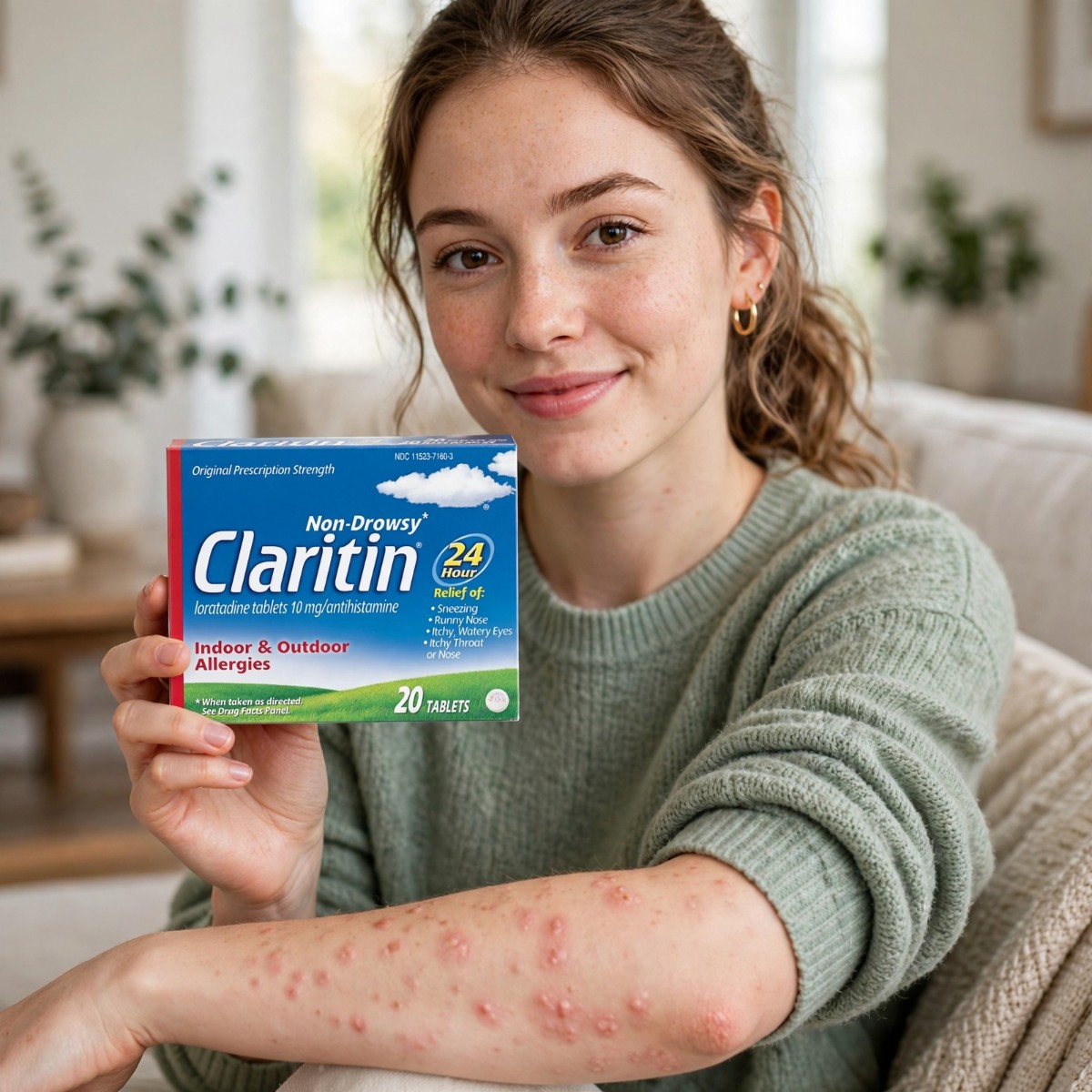
| Loratadine (Claritin) | Low | Gentle, but some people find it less effective for hives |
| Desloratadine (Clarinex) | Low | Prescription in the U.S. |
Individual responses differ. If one antihistamine does not help after a fair trial, a doctor may suggest trying another or adjusting the dose. Read more about Zyrtec for hives and Allegra for hives.
How to Choose
- If you need to stay alert: fexofenadine or loratadine are least likely to cause drowsiness.
- If itching keeps you up at night: a cetirizine or levocetirizine dose in the evening may help, although some people feel sleepy.
- If you have kidney or liver disease or are 65 or older: ask a doctor first, because dosing may need to change.
- If you are pregnant or breastfeeding: talk to your doctor before taking any antihistamine.
What About Benadryl?
Diphenhydramine (Benadryl) is a first-generation antihistamine that can ease itching, but it causes significant drowsiness and wears off within hours. It is generally not recommended as a routine treatment. See Benadryl for hives to learn more.
Can You Take a Higher Dose?
If a standard dose does not control hives, guidelines allow doctors to increase the antihistamine dose, up to four times the standard amount in some patients. Never raise your dose on your own. Follow the package label unless a doctor tells you otherwise.
How Long Until an Antihistamine Works?
Many people notice relief from itching within an hour or two. For chronic hives, it can take days to weeks of daily use to see the full effect. Over-the-counter labels generally say to stop use and ask a doctor if symptoms do not improve after 3 days or hives last longer than 6 weeks.
Possible Side Effects
Common side effects include drowsiness, dry mouth, headache and fatigue. Alcohol can increase drowsiness. Stop use and get help right away if you have trouble breathing, swelling of the face or tongue, or other signs of a serious allergic reaction.
When an Antihistamine Is Not Enough
If hives persist despite antihistamines, a doctor can consider higher doses, other medicines, or targeted therapy for chronic hives. See chronic hives treatment. The Hives Treatment Center, founded by Dr. Tiffany Young, offers online and in-person care in San Francisco for people whose hives are not controlled by over-the-counter medicine.
Frequently Asked Questions
Which antihistamine works fastest for hives?
Cetirizine and levocetirizine tend to start working within about an hour for many people, but speed varies from person to person.
Is it safe to take an antihistamine every day?
For chronic hives, daily non-sedating antihistamines are a standard treatment, usually under a doctor’s guidance.
Can antihistamines prevent hives?
They reduce hives and itching, and taken daily they can lower how often new welts appear. They do not guarantee that hives will never return.
Beyond Antihistamines
If you are not getting the relief you need, there are other options. Visit our hives treatment page to see the latest treatment options for your outbreak.
This information is for educational purposes only and is not a substitute for professional medical advice, diagnosis or treatment. If you think you are having a medical emergency, call 911.